
Dental Implants


Dental Implants
What is All-on-6?
All-on-6 is a dental implant technique used in restorative dentistry to replace a full arch of missing or damaged teeth with a fixed dental prosthesis. The procedure involves the use of six dental implants to support a full arch bridge, providing a stable foundation for the replacement teeth.
The name All-on-6 refers to the fact that all teeth in an arch can be supported by just six implants. This technique is different from traditional implant-supported dentures, which usually require a larger number of implants.
The All-on-6 procedure is typically performed under local anaesthesia and involves placing the implants strategically in the jawbone. After the implants have been placed, a temporary dental prosthesis is attached to the implants to allow for proper healing and osseointegration of the implants with the jawbone.
Once the implants have fully integrated with the jawbone, a final dental prosthesis, such as a bridge or denture, is fabricated and secured to the implants. The result is a natural-looking, functional set of replacement teeth that can improve a patient's ability to eat, speak, and smile with confidence.

When Should you go for All-on-6 dentures?
All-on-6 dentures are dental restoration procedures that involve the placement of six dental implants in the jawbone to support a complete arch of teeth also known as the denture. This procedure is excellent for people who have lost most or all of their teeth in the upper or lower jaw but the bone is dense enough to hold the implants. These implants are strong enough to resist the forces of mastication and last long.
All-on-6 dentures are dental restoration procedures that involve the placement of six dental implants in the jawbone to support a complete arch of teeth also known as the denture. This procedure is excellent for people who have lost most or all of their teeth in the upper or lower jaw but the bone is dense enough to hold the implants. These implants are strong enough to resist the forces of mastication and last long.
Classic Signs Suggestive of All on 6 Dentures
Severe tooth loss
If you have lost most or all of your teeth in the upper or lower jaw, All on 6 dentures can provide a stable and permanent solution to restore your smile and improve your ability to eat and speak.
Bone loss
If you have experienced significant bone loss in your jaw due to missing teeth, the All-on-6 dentures can help by providing a secure and stable foundation for your replacement teeth.
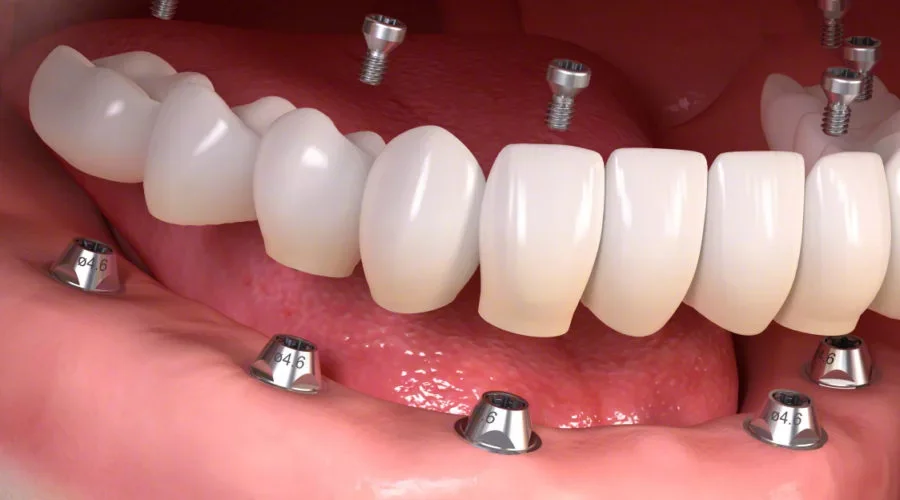
If you have experienced significant bone loss in your jaw due to missing teeth, the All-on-6 dentures can help by providing a secure and stable foundation for your replacement teeth.

Denture discomfort
If you currently wear traditional dentures and experience discomfort or difficulty with eating or speaking, All-on-6 dentures can provide a more stable and comfortable solution.
Aesthetic concerns
If you are unhappy with the appearance of your teeth or smile, All-on-6 dentures can help to restore
your confidence and improe your overall appearance.
Classic Signs Suggestive of All on 6 Dentures
Severe tooth loss
If you have lost most or all of your teeth in the upper or lower jaw, All on 6 dentures can provide a stable and permanent solution to restore your smile and improve your ability to eat and speak.
If you have lost most or all of your teeth in the upper or lower jaw, All on 6 dentures can provide a stable and permanent solution to restore your smile and improve your ability to eat and speak.
Bone loss
If you have experienced significant bone loss in your jaw due to missing teeth, the All-on-6 dentures can help by providing a secure and stable foundation for your replacement teeth.
If you have experienced significant bone loss in your jaw due to missing teeth, the All-on-6 dentures can help by providing a secure and stable foundation for your replacement teeth.
Denture discomfort
If you currently wear traditional dentures and experience discomfort or difficulty with eating or speaking, All-on-6 dentures can provide a more stable and comfortable solution.
If you currently wear traditional dentures and experience discomfort or difficulty with eating or speaking, All-on-6 dentures can provide a more stable and comfortable solution.
Aesthetic concerns
If you are unhappy with the appearance of your teeth or smile, All-on-6 dentures can help to restore your confidence and improve your overall appearance.
If you are unhappy with the appearance of your teeth or smile, All-on-6 dentures can help to restore your confidence and improve your overall appearance.
What are Zygoma Implants?
Zygoma implants are a type of dental implant used for patients with severe bone loss in the upper jaw. These types of implants provide a solution for these patients by utilizing the dense and strong bone of the cheekbones to anchor the implants. They are longer than traditional dental implants and are anchored into the cheekbones (zygomatic bone) instead of the jawbone.
Zygoma implants are typically used to support full arch replacement teeth, similar to All-on-4 implants. They can provide a stable and long-lasting solution for patients who would otherwise not be candidates for traditional dental implants. However, zygoma implants are a more complex and invasive procedure and may not be suitable for all patients. Your dentist or oral surgeon can evaluate your oral health and determine if zygoma implants are the best option for you.
What are Zygoma Implants?
Zygoma implants are a type of dental implant used for patients with severe bone loss in the upper jaw. These types of implants provide a solution for these patients by utilizing the dense and strong bone of the cheekbones to anchor the implants. They are longer than traditional dental implants and are anchored into the cheekbones (zygomatic bone) instead of the jawbone.
Zygoma implants are typically used to support full arch replacement teeth, similar to All-on-4 implants. They can provide a stable and long-lasting solution for patients who would otherwise not be candidates for traditional dental implants. However, zygoma implants are a more complex and invasive procedure and may not be suitable for all patients. Your dentist or oral surgeon can evaluate your oral health and determine if zygoma implants are the best option for you.

When Should you go for Zygoma Implants?
People who have reduced maxillary height or low bone density and cannot go for sinus lift procedures for implants are ideal for zygomatic implants. Zygoma implants can provide a stable and long-lasting solution for patients who would otherwise require bone grafting or other more invasive procedures.
Signs that You Should go For Zygoma Implants
Severe bone loss
If you have experienced significant bone loss in the upper jaw due to periodontal disease or other factors, zygoma implants may be a suitable alternative to bone grafting or other procedures to restore bone density.
If you have experienced significant bone loss in the upper jaw due to periodontal disease or other factors, zygoma implants may be a suitable alternative to bone grafting or other procedures to restore bone density.
Failed or failing dental implants
If you have previously undergone traditional dental implant placement and experienced implant failure due to insufficient bone, zygoma implants may be a more stable and long-lasting solution.

If you have previously undergone traditional dental implant placement and experienced implant failure due to insufficient bone, zygoma implants may be a more stable and long-lasting solution.

Multiple missing teeth
If you are missing multiple teeth in the upper jaw and do not have enough bone to support traditional dental implants, zygoma implants can provide a more comprehensive and permanent solution.
If you are missing multiple teeth in the upper jaw and do not have enough bone to support traditional dental implants, zygoma implants can provide a more comprehensive and permanent solution.
Poor dental health
If you have poor oral hygiene or have experienced significant gum disease or other dental issues, zygoma implants may be a suitable alternative to traditional dental implants.
If you have poor oral hygiene or have experienced significant gum disease or other dental issues, zygoma implants may be a suitable alternative to traditional dental implants.
Procedure of Zygoma Implant Placement
You will meet with your dentist or oral surgeon for a consultation and examination to determine if you are a good candidate for zygoma implants. The dentist will evaluate your bone density and overall oral health and create a customized treatment plan.

- Anesthesia:
-
- The procedure is usually performed under general anesthesia to ensure you are comfortable and pain-free throughout the procedure.
-
- Incisions:
-
- The dentist will make incisions in your gum tissue to expose the cheekbone and the area where the implant will be placed.
- Implant placement
-
- A special surgical technique is used to place the zygoma implant into the cheekbone. The implant is designed to bypass the thin and weakened upper jawbone and anchor into the denser cheekbone.
-
- Attachment of abutment and prosthetic teeth:
-
- Once the implant is securely in place, the dentist will attach an abutment to the implant. The abutment serves as the attachment point for the prosthetic teeth or dental bridge.
- Recovery:
-
- After the procedure, you will be monitored closely as you wake up from anesthesia. You will be given instructions on how to care for your implants and what to expect during the healing process. Your dentist or oral surgeon may prescribe pain medications or antibiotics to help manage any discomfort or prevent infection.
-
- Follow-up appointments:
-
- You will need to schedule follow-up appointments with your dentist or oral surgeon to ensure the implants are healing properly
You will meet with your dentist or oral surgeon for a consultation and examination to determine if you are a good candidate for zygoma implants. The dentist will evaluate your bone density and overall oral health and create a customized treatment plan.

- Anesthesia:
- The procedure is usually performed under general anesthesia to ensure you are comfortable and pain-free throughout the procedure.
- Incisions:
- The dentist will make incisions in your gum tissue to expose the cheekbone and the area where the implant will be placed.
- Implant placement
- A special surgical technique is used to place the zygoma implant into the cheekbone. The implant is designed to bypass the thin and weakened upper jawbone and anchor into the denser cheekbone.
- Attachment of abutment and prosthetic teeth:
- Once the implant is securely in place, the dentist will attach an abutment to the implant. The abutment serves as the attachment point for the prosthetic teeth or dental bridge.
- Recovery:
- After the procedure, you will be monitored closely as you wake up from anesthesia. You will be given instructions on how to care for your implants and what to expect during the healing process. Your dentist or oral surgeon may prescribe pain medications or antibiotics to help manage any discomfort or prevent infection.
- Follow-up appointments:
- You will need to schedule follow-up appointments with your dentist or oral surgeon to ensure the implants are healing properly